
|
The Death Penalty Transcripts of three lectures concerned with capital punishment. 1. The Violin and the Death Penalty - about the Suarez case wherein a police officer was shot 2. Death Penalty For Cop Killers - about the notion that those who kill police officers (and members of certain other privileged groups) deserve the death penalty. 3. The Death Penalty - transcript below. The Death Penalty The comments that follow have been inspired by a piece written by Dennis Prager. His arguments are the ones that are commonly put forward in support of capital punishment. But if you look at these arguments closely, they all fail. 1. One Dead Innocent is the Same as any Other According to Dennis, "One of the most common, and surely the most persuasive, arguments against capital punishment is that the state may execute an innocent person." But, Dennis continues, if those who are against capital punishment are so concerned about innocent individuals, then why are they not making a fuss about any social policy which brings about the death of innocent individuals - such as car accidents. Here are his words. "First of all, there is almost no major social good that does not lead to the death of innocent individuals. Over a million innocent people have been killed and maimed in car accidents. Would this argue for the banning of automobiles?" In other words, why make such a fuss about the death penalty when so few innocents are killed, compared to the number of innocents in car accidents?
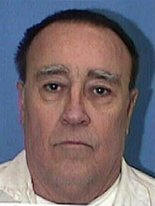
Cameron Todd Willingham Well, there are many reasons why the state execution of innocent others is very different from the accidental deaths of innocents. a. For all intents and purposes, the state is all-powerful. Not only has it the wherewithal to ensure that innocent individuals are put to death for political reasons, it actually does put innocents to death for political reasons! For example, the recent exoneration of over 100 allegedly very dangerous criminals in the USA through DNA testing demonstrates quite clearly that people are convicted on the basis of false evidence. Science and nature did not convict these innocents - legal policies and procedures based on political considerations did. And it is far too dangerous to allow an all-powerful state to execute innocent people without some form of public outrage being generated every time that this happens. And so, for example, just imagine if absolutely everyone in the USA was in favour of the death penalty. What reaction would there be to the discovery that the state was executing innocent people? Well, presumably, none! - since those in favour of the death penalty do not seem to be outraged when innocent people are executed. Dennis certainly isn't outraged. But is this the kind of society that we would want to live in? Do we really want to live in a society where the state employs procedures that kill innocents, but no-one makes a fuss about it? Do we really want to live in a society where the state employs procedures that kill innocents, but no-one makes a fuss about it? What kind of people are we supposed to be? b. There is something decidedly different about coldly and calculatedly putting an innocent person to death when compared to an innocent dying by accident. Indeed, the former is so utterly unacceptable and abhorrent to the vast majority of people that only the most cruel of psychopaths would ever do such a thing. And if we claim that it is morally acceptable for the all-powerful state to put to death innocent others, then we are claiming that it is morally acceptable for the all-powerful state to do what only the most cruel of psychopaths would ever do. nothing could be more stupid than to allow an all-powerful state to act like a cruel psychopath! And, surely, nothing could be more stupid than to allow an all-powerful state to act like a cruel psychopath. And how Dennis can possibly equate morally such a horror to those deaths that occur by accident is astonishing. Now Dennis would presumably respond by saying, Aha! When the American state puts an innocent person to death, it does not believe the person to be innocent. It believes the person to be guilty. And so it is not true to say that the state is "coldly and calculatedly" putting innocent people to death. It believes them to be guilty. It is just that, on occasion, mistakes are made. But this is no let-out clause. Even though the state does not intend to execute innocents, this does not alter the fact that innocents are sometimes "coldly and calculatedly" put to death. This is how they die! And this is not the case when it comes to most everyday accidents. Accidents are different from executions.
Johnny Garrett c. Thousands of people die in accidents of one form or another every day. And Dennis' arguments here concerning the death penalty really boil down to this. What does it matter that a very small number of innocents are killed by the state given that so many thousands already die in accidents? In other words, Dennis' arguments are to do with a consideration of numbers rather to do with a consideration of moral processes. Why do these relatively few innocents who suffer the death penalty actually matter? - is, effectively, what he is saying. Well, I have some news for Dennis. They matter very much! It is NOT merely the number of innocents (and please remember that in this part of the discussion we are talking only about innocents) that concerns those who oppose the death penalty, it is the sheer immorality of killing innocents that concerns them. And Dennis must be able to recognise this. Look. There were some 30,000 road fatalities in the USA last year, and only a very tiny number of innocents have probably been executed during the past few years. But, just for the sake of argument, just imagine that the number of road fatalities dropped dramatically to only 10,000 a year, while the numbers of innocents executed jumped up to 1000 a year. Would Dennis say that this was, overall, a significant change for the better? After all, with 20,000 fewer innocent deaths on the roads, and with, roughly, only 1000 extra innocent deaths in the electric chair, then, on balance, there is a saving of 19,000 lives. On the basis of the numbers alone, that's a pretty good improvement! But would Dennis, or anyone, really feel better about their society knowing that 1000 innocent people were actually being executed every year? No, of course not. In fact, they would be horrified. And the reason for this is that there is a huge difference between the state execution of an innocent and the death of an innocent by a normal everyday type of accident. They are just not the same. Indeed, what if there were no road fatalities at all, but there were 20,000 innocents executed every year? How would Dennis feel then? Would he feel better because fewer innocents had died? - compared to the original 30,000 road fatalities. Would his society have improved? Would he consider his society to be more 'moral'? I don't think so. 20,000 innocents executed would make us far worse off by a long way compared to 30,000 road fatalities. In other words, the numbers alone do not help us very much. d. Dennis equates the deaths of innocents by accidents with the executions of innocents by the state. He is saying that given that death-penalty opponents do not seem to give a hoot about the accidental deaths of innocents, why on earth are they so concerned about the accidental execution of innocents by the state? If they do not care about the one, why do they care about the other? After all, they are both 'accidents', and the outcomes are just the same. The execution of innocent others is, after all, just another type of 'accident' - due to unfortunate errors that occurred somewhere in the legal procedures. OK. Well, let's follow that through. If the state execution of an innocent can be deemed to be an 'accident', then, presumably, the act of a murderer who kills an innocent can also be viewed as an 'accident'. What is the difference between the two? After all, things happen. Putting this another way: If Dennis is not worried about the execution of innocent others who are already living inside a prison cell - having been falsely convicted of a crime - then why on earth is he so concerned about those innocents who are killed by murderers who are not living inside a prison cell? After all, innocent is innocent - no matter where you might live. Dennis' own argument flies right back in his face. He cares for one type of innocent (the one who is murdered on the street) but he cares not about the other one - the falsely-accused one sitting inside a prison cell - and living on Death Row. e. If Dennis is prepared to endorse policies that result in the execution of innocent others - for various reasons - then, presumably, it will not be long before he also proposes that, for example, anyone involved in the causing of 'accidental' deaths (e.g. a surgeon making a mistake on the operating table) should also be executed. No. No, Dennis, would say. There is a big difference between a murderer and a doctor who makes a mistake. Yes, indeed there is. There is the question of intent. But, at this juncture, we are not talking about murderers. We are only talking about innocents! And so the question of intent does not arise. if it is all right to execute innocents, then it is certainly all right to execute doctors who make fatal mistakes ... In other words, if it is all right to execute innocents, then it is certainly all right to execute doctors who make fatal mistakes (and who are, in fact, somewhat less than innocent).
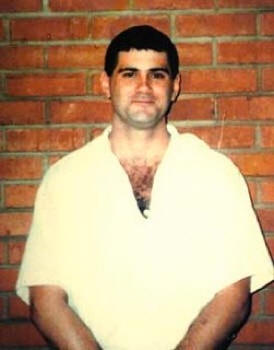
Ruben Cantu Anyway. Moving on. 2. Executions Save Lives Dennis says that, "Far more innocent people have already died because we did not execute their murderers." a. Aha! Dennis is definitely concerned about the deaths of a few innocents. How strange! A few moments ago, he did not seem very concerned about them. He is prepared to accept fatal car accidents and death by roller coasters and the zillions of fatal accidents that take place in normal life, but he is suddenly worried about a few murders. And it really is only a few murders that he is talking about at this juncture - though even this few is doubtful. After all, he is not talking about all homicides. He is only talking about the extra homicides that he alleges take place when the death penalty is not imposed. So, why is Dennis worried about the few extra murders of innocents (if there is no death penalty) when he is not worried about roller coasters etc? Do you see? His whole criticism about people not being concerned about roller-coaster and road accidents etc, and yet being very concerned about a few innocents being executed - which he implied was hypocritical - has completely backfired on himself. He is now worrying about the few extra deaths that might arise if convicted murderers are not executed. b. Dennis was castigating death-penalty opponents for not being concerned about everyday accidents ... ... "Anyone whose criterion for abolishing capital punishment is saving innocent lives, should be for a 40-mile-per-hour speed limit and for abolishing roller coasters." You see. He is trying to say that if you care about the executions of a few innocent people, then you should be far more concerned about the accidental deaths of many people. But he does not apply the same reasoning to himself. If Dennis is so concerned about the few extra murders that he reckons takes place when there is no death penalty, then why isn't he the one wanting to ban roller coasters, and why isn't he the one proposing a 40 mile-per-hour speed limit? This man has a double standard, One for him, and another one for opponents of the death penalty. There is no strong evidence to suggest that capital punishment reduces the number of homicides ... c. As a point of fact: There is no strong evidence to suggest that capital punishment reduces the number of homicides any more than do very long prison sentences. If there is an extra deterrent effect of capital punishment, then it is marginal at best. Indeed, there is a great deal of evidence to suggest that capital punishment (and very long prison sentences) increases the likelihood of violence throughout society (e.g. as in the drugs war, prohibition etc) and, as a consequence, the homicide rate almost certainly increases as a result of it.
Joseph O'Dell 3. Capital Punishment Achieves Social Good Dennis says, "if abolitionists were intellectually honest, they would have to argue that capital punishment achieves no social good or that it is immoral to kill any murderers." Well, as mentioned above, not only does the evidence suggest that capital punishment achieves no social good, it actually suggests that it achieves a lot of social bad. And, furthermore, here are some more socially bad things that it does. a. Criminals who commit particularly heinous forms of murder usually have had an appalling history. And, very often, they also have clearly visible signs of severe brain damage. Just think what the world would gain by studying them rather than by killing them. With the rapid developments taking place in the field of brain-scanning technology and the growing understanding of brain chemistry, there is a great deal to be gained from studying individuals who are very dysfunctional. Why should we destroy such a valuable resource? Surely such a resource would contribute hugely to the very 'social good' that Dennis is seeking. State execution in the USA is, in reality, mostly about hatred and vengeance. b. State execution in the USA is, in reality, mostly about hatred and vengeance. It does not bring about a better world and it does not bring back the dead. It mostly satisfies people's thirst for revenge. And revenge is not a good thing for people in a society to believe in and to act upon. Cool, calm, reasoned justice, yes, but not revenge, because a belief in the virtues of revenge tends to entitle all of us to take any action that we feel is appropriate to the hurt that has befallen us. And, unfortunately, feelings of revenge too often result in gross over-reactions, with matters quickly getting out of hand, as one person responds and then another person counter-responds. One only needs to look at the decades of troubles and revenge attacks in Northern Ireland, in the Middle East, and in many other parts of the world to see that it is mostly feelings of revenge that tend to maintain and escalate all the violence. And public acceptance of the death penalty just greatly encourages people to accept revenge as a legitimate tool of justice. Conversely, abolishing the death penalty would achieve a 'social good' because it would be abolished at least partially on the grounds that, firstly, revenge is not the same as justice, and, secondly, revenge is not something conducive to societal harmony. 4. It is not Immoral to Kill Murderers Dennis' suggests that those who oppose the death penalty need to show that, "it is immoral to kill any murderers". Well. No, they do not! Indeed, it might be perfectly moral to kill all murderers. It might be perfectly moral to cut off the hands of people who steal. It might be perfectly moral to kill women who abort babies. But are these the roads down which we want our societies to travel? And, anyway, what, exactly, is a murderer? On what basis does one murderer morally deserve the death penalty whereas another one does not? Who decides? Would we all agree on the infinitely complicated dividing lines? Would we also claim to know all the circumstances and the ins and outs of each case? Can the vote of 12 people in a jury determine what everybody else's morality is supposed to be? Can the vote of 12 people in a jury determine what everybody else's morality is supposed to be? You see. The moral question posed by Dennis does not really even have an answer that is simple enough to solve 'in practice'.
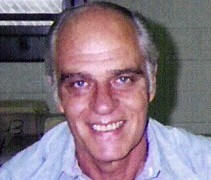
David Spence 5. Some Murderers might go on to Kill Others Dennis says, "Murderers who are not executed have murdered innocent people -- usually fellow prisoners. And the very real possibility of escape from prison means that murderers threaten far more innocent lives than capital punishment does. a. Dennis is back to those numbers again. Why is Dennis so concerned about these few extra murders when he is not concerned about the execution of innocents nor about the death toll through driving and roller coaster accidents etc. b. Dennis says that opponents of the death penalty, "believe that only advocates of capital punishment can have blood on their hands, when and if the state executes an innocent person. But they, the abolitionists, somehow have no blood on their hands when a convicted murderer murders an innocent." Well, the reason for this difference in attitude is quite simple. When the state executes innocents, its actions are taken in the name of - and on behalf of - the people, and, further, it is acting in a manner which is in accordance with the wishes of those who support capital punishment. On the other hand, murderers who kill innocents are not acting in the name of - and on behalf of - the people, and, further, they are not acting in a manner which is in accordance with the wishes of those who oppose capital punishment. As such, those who do support capital punishment do have 'blood on their hands' when the state executes innocents because the state is acting in accordance with their wishes. But those who oppose capital punishment do not have 'blood on their hands' when non-executed murderers commit further offences - because these murderers are not acting in accordance with their wishes. 6. The Deaths of a Few Innocents Don't Matter Dennis begins his last paragraph by saying, "I fully acknowledge my moral responsibility for any innocent person executed by the state." a. He seems to be suggesting that he is resigned to the fact that innocents will be executed by the state if it maintains the death penalty. On balance, he reckons, the death penalty is still worth the price. But the truth of the matter is this. Dennis would have a completely different attitude if it was he, or his wife, or his children, or his brother, or his father, or his friend, or if any of those who are close to him, were going to the electric chair for a crime that they did not commit. He would not simply shrug his shoulders and say, "Oh well, things happen." He might say this if one of his loved ones was accidentally killed in a car crash. But would he really have the very same attitude if one of his loved ones was actually being incarcerated, and was later to be executed for a crime that he or she did not commit? No way! Dennis would kick up a real stink about it. And he would be well and truly outraged. In other words, he has a double standard - one for people who are close to him, and another for people who are not. (And, of course, the same is true for most of us, including me.) He is resigned to the fact that the state might execute innocent people, but only if these people are not close to him. Is this an acceptable and healthy moral attitude? No. Furthermore, his attitude toward the state's purposeful execution of his innocent loved one, would be very different indeed compared to what his attitude would be if his loved one had simply been killed in an accident. And so what Dennis is really saying is that, in practice, he is resigned to the executions of innocent others - for various reasons - provided that he, himself, remains personally unaffected by it all. And this is not a satisfactory moral position to take. And it also takes people along a very slippery slope. If people are prepared to support the inflicting of serious injustices upon innocent others ... then surely they can have no complaints should others inflict serious injustices upon them! If people are prepared to support the inflicting of serious injustices upon innocent others in order to achieve a marginally improved outcome for everyone else - and particularly for themselves - then surely they can have no complaints should others inflict serious injustices upon them! For example, would Dennis find it acceptable for 10 homeless winos to kill a millionaire in order to take over his mansion on the grounds that their lives would improve enormously compared to living on the streets, and given that they would also be far better protected from any passing lunatics who might want to kill them? Well. Probably not. But why not? - given that he is prepared to accept the deaths of innocents in order to make the world - particularly his world - a safer place. Why shouldn't the winos have the same attitude? "We shall kill the innocent millionaire in order to make our own lives safer." Indeed, just think about how many lives we could save by harvesting the innards of this gorgeous thing, ...
Her liver, heart, pancreas, kidneys, lungs, bowels and even her lovely tummy could be put to great use as transplanted organs and, hence, save the lives of numerous people. Well, why not? After all, if it is only the numbers that count then, surely, sacrificing the above specimen would be justifiable. Is this where we really want to go? ----------------------- About three months ago, one of my car windows was smashed, and a couple of CDs were stolen. It was probably one of the many delinquent teenagers round here who was responsible. For 48 hours I would have murdered the culprit if I could have gotten my hands on him. It cost me time. It cost me money. And I felt generally less secure. A cricket bat to the skull. A good few punches in the face. Grrrr! And when my father died on the operating table a few years ago, I pretty much had only one thing in mind. Kill. Kill that f^^k^^g surgeon. Kill that f^^k^^g surgeon. Believe me. I am no angel. I would even like to see certain horrible people put to death with my very own eyes. Think of the satisfaction! "Give them everything that they deserve," is how I often feel. But, as I said above. Things happen. And the almost inescapable truth is that the best way for society to deal with such things - if possible - is non-violently. Sometimes I wish that this wasn't so. But it is. And with their huge resources, their skills and their super powers, Americans do not nowadays need to execute their home-grown murderers - particularly since they have already got them stuck inside prison cells. And it is very depressing for a lot of people to see that they still do execute people. Of course, some murderers definitely deserve the death penalty. And some deserve even worse! And none of my arguments above suggests otherwise. But the treatment that truly heinous criminals 'deserve' should not count for anything. Why on earth should we even care what they 'deserve'? Surely, such criminals have lost the right to have taken into consideration what they deserve. It is what their treatment does to the rest of us that we need to consider - and this, of course, includes those innocents who are caught up in such treatment.
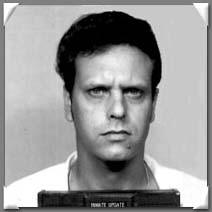
Claude Jones At the end of the day, we are surely aiming toward a world wherein there are no murders, and where there are no purposeful killings. And the all-powerful state just has to lead the way. There was a time, perhaps not long gone, when the death penalty was an extremely valuable and necessary tool for western countries. The people just had to curb serious crimes and violence with very limited resources. There was no other realistic way of doing this. But the USA now has huge resources. It is simply a question of redirecting some of them into more effective crime-preventative measures, as, perhaps, advised by its very own police chiefs ... "While politicians have extolled the importance of capital punishment in fighting crime, they have failed to assess the actual priorities of those in law enforcement and have saddled the taxpayers with an enormously costly death penalty at the expense of more effective crime fighting strategies. Police chiefs rank the death penalty last as a way of reducing violent crime, placing it behind curbing drug abuse, more police officers on the streets, lowering the technical barriers to prosecution, longer sentences, and a better economy with more jobs. The death penalty was rated as the least cost-effective method for controlling crime. Insufficient use of the death penalty is not considered a major problem by the majority of police chiefs." |
|
Finally, does anyone here seriously believe that the death penalty would still be in operation if it was women, rather than men, who were the ones mostly being executed? - e.g. see, ... Women Who Kill Too Much - The Twelve 'Female-Only' Defences to Murder |




AH's RSS Feed
Recent comments from some emails which can be viewed in full here. ...
"I cannot thank you enough."
"I stumbled upon your web site yesterday. I read as much as I could in 24 hours of your pages."
"I want to offer you my sincere thanks."
"I would just like to say that you are indeed a hero. "
"Your articles and site in general have changed my life."
"I have been reading your articles for hours ..."
"Firstly let me congratulate you on a truly wonderful site."
"I must say there aren't many sites that I regularly visit but yours certainly will be one of them, ..."
"It is terrific to happen upon your website."
"I just wanted to say thank you for making your brilliant website."
"I think I'm in love!" (from a woman)
"I love you. That is all. I love you!!!!" (from a man!)
"Your site is brilliant. It gives me hours of entertainment."
"You are worth your weight in gold."
"Love your site, I visit it on a regular basis for relief, inspiration and for the sake of my own sanity in a world gone mad."
"I ventured onto your site ... it's ABSOLUTELY BRILLIANT, and has kept me enthralled for hours!"
"I love the site, and agree with about 98% of what you post."
"I have been reading your site for a while now — and it is the best thing ever."
"you are doing a fabulous job in exposing the lies that silly sods like me have swallowed for years."
Tweet the article above to your followers ...

Or, to share the article with your social
media account click the
graphic below ...

Latest articles ...
The Psychological Differences Between Men and Women
Your Sexual Behaviour And Your Genes
Problems with Norton Internet Security?
AH's RSS Feed