
|
A National DNA Database? As someone who believes very strongly in civil liberties, I find it somewhat irritating and, quite frankly, an embarrassment, to see fellow civil libertarians making such a mess over the issue of a national DNA database - especially since they will not be able to prevent one from being created. Worse, they are discrediting the cause for civil liberties and alienating millions of potential supporters. Civil liberties activists seem mostly opposed to the development of a national DNA database on the grounds that state officials might somehow be able to abuse ordinary citizens by using the data that would be contained in it. However, when one looks closely at their arguments, their fears seem mostly to be unfounded and any potential abuses of power that could be engaged in by people in authority could easily be prevented by maintaining proper safeguards. THE WHOLE PLANET would eventually benefit from even one national DNA database because of the huge resource that it would provide for those researching cures for diseases and the enhancement of human life. A national DNA database would allow medical scientists to increase vastly their understanding A national DNA database would allow medical scientists to increase vastly their understanding of the roles that genes play when it comes to every disease that there is - including those to do with ageing and mental health functioning. It would also help researchers to identify those who were at future risk and so allow preventative interventions to take place if appropriate. Indeed, given that the entire chemistry of the human body is affected by genes, the possibility of curing or preventing nearly all current medical ills with the help of gene-associated therapies is very high. The benefits for everyone would be enormous, and the massive amount of resources that are now currently needed to provide proper medical help to people could also be reduced considerably. And these are just the medical benefits.
But there are also huge benefits to be gained from the considerable reduction in crime that would occur if there was a national DNA database. After all, most crimes are committed by the same people - over and over again - and a DNA database would help to stop them in their tracks thereby saving everyone a huge amount of expense and misery. It would also help young boys to stop turning into more serious criminals because they would be caught at an earlier stage in their criminal careers. Everyone is affected by crime - if not directly, then indirectly, Everyone is affected by crime - if not directly, then indirectly, through the greater security measures that they have to take - or pay for - and through the terribly negative effects that crime has on everyone's psyche. With a national DNA database reducing crime, the size of the police force could be dramatically reduced and so could the whole of the criminal justice system. So, why are civil libertarians so scared of a national DNA database? How, exactly, do they think that state officials are going to use such a database to abuse their powers? After all, the fact that someone has access to a genetic database coded in 1's and 0's on a computer does not mean that they can actually create the DNA in a test tube and, perhaps, plant it somewhere. Indeed, if someone wants to plant someone else's DNA, say, at the scene of a crime, then this is already very easy to do. They simply need to obtain just a tiny sample of some small part of them and put it there! Further, it seems that most of the wrongful arrests and abuses of power carried out by police officers and lawyers occur because they are desperate to 'get a result'. A national DNA database would reduce dramatically this sort of pressure on them. a national DNA database would make it far more difficult for those with power to abuse it. Indeed, a national DNA database would make it far more difficult for those with power to abuse it. After all, the more that valid information is available, the less difficult it is to cover up one's tracks - state official or not. Civil libertarians often argue that a national DNA database would raise the specter of guilt. But the specter of guilt nowadays falls on to so many people precisely because there is so much criminality and precisely because police officers very often do not have enough evidence to pinpoint the real criminals. Of course, there would definitely be some abuses of power by a few of the relatively few state employees who would have access to a national DNA database. But, overall, such a database would actually reduce significantly the abuses of power that could take place by greater numbers of other state officials - and particularly so if proper safeguards were put in place. Indeed, if civil libertarians fear that police officers could abuse their powers by having access to such a database then matters could easily be arranged so that police officers themselves did not, in fact, have any access to it. If every place at every time was being recorded somehow - DNA, CCTV, global positioning - or, let's just say that absolutely everything was recorded on film - then no-one would be able to get away with anything! - because it would all be recorded. And state officials would find it absolutely impossible to abuse their powers without being caught doing so. And, quite simply, the closer that we get to this state of affairs, the safer from official abuse will everyone be. just because events are being recorded, it does not follow that the events actually need to be monitored (It is important to note that just because events are being recorded, it does not follow that the events actually need to be monitored by people, or even their recordings retrieved. Perhaps, for example, access to any recordings would only be granted when serious matters were at stake.) The reduction in crime that a national DNA database would bring about would also save so many resources that governments could easily afford to spend a great deal of money in establishing independent bodies which had the sole duty of ensuring that abuses of power did not take place. And it is in this area where civil liberties activists should be devoting their energies. civil liberties activists also actually lose many supporters by arguing against the development of a national DNA database Further, from a political point of view, civil liberties activists also actually lose many supporters by arguing against the development of a national DNA database because ordinary people know that it has the potential to provide such huge benefits to just about everyone. So, in summary, yes, a DNA database could certainly be used to help some people - particularly some state employees - to indulge in criminal activity. But it would prevent millions of other crimes. And, in fact, it would actually reduce the power of state officials to abuse ordinary citizens by a far greater amount than it would increase it. Further, the possibility that a few state officials - hundreds even - might, over time, abuse their powers through accessing a national DNA database pales into utter insignificance in comparison to the positively enormous amount of good that can be derived from it both in the area of crime reduction and in medicine. Power is nowadays shifting all the time away from police officers, guns, soldiers, politicians and the state Civil liberties activists need to study this issue far more closely and, perhaps, try to look more into the future and less into their History books. Power is nowadays shifting all the time away from police officers, guns, soldiers, politicians and the state. It is definitely moving into the hands of technocrats, computer folk, scientists and thinkers. And it is the spread of information technology that is doing this. This is something that should be encouraged by civil liberties activists rather than thwarted by them. Finally, civil liberties activists should really start to think far more deeply about why it is that the setting up of a national DNA database - despite its huge potential for good - is not being actively and hotly pursued by many people who walk in the corridors of power. And the reason is simple. The more crime, chaos and mayhem that there is out there, the more power do they retain relative to everyone else.
|
|
Hi AH ... ... By supporting a national DNA database, you are supporting governmental tyranny. ... Regards V Hi V I could argue that it is **you** who is endorsing tyranny by trying to thwart measures that would help to prevent millions of crimes (some of them by state officials) and which would also help to prevent millions of people suffering from terrible diseases. And for what reason do you do this? Simply because you fear that somebody in official circles, one day, might want to do something bad to YOU! Besides which, do you really think that the majority of people are going to worry about what the state **might** do to **some** people given the huge benefits that they would gain in the future from having their DNA on a database? There is just far too much to gain by using such technologies. CCTV, face-recognition, DNA analysis etc etc are already creeping up on us. Their implementation and development might be delayed by activism, but no-one is actually going to stop this. There is just far too much to gain by using such technologies. Now, civil liberties activists can either keep saying NO NO NO to every piece of new recognition technology - and not getting anywhere - always losing their arguments, bit by bit - or they can say RIGHT, let's have a look at this technology very closely and make damn sure that the citizens are protected from any abuses of power that could arise from using it. In other words, those concerned about civil liberties should be saying YES to the technology, but demanding the means to be able to scrutinise most thoroughly its usage. Here, for example, is a credit card disaster ... It is a prime nightmare of the digital age: all of your personal information — credit card numbers, home address, Social Security number — stolen and passed around, or perhaps even posted on the Internet for anyone to see. link now defunct ... but do you really think that people are going to stop wanting to use their credit cards? Are they not amazingly useful devices for saving us time and helping the economy to flow? Are we going to step backwards and backwards in time to a cash-only economy? Do civil libertarians want us to ignore the benefits of technology because oftentimes informational systems might be abused? Do we get rid of computers because there are hackers? Of course not. The way forward is clearly not to abandon credit cards, but to develop better safeguards. And opposing the creation of a DNA database is a bit like opposing credit cards. And my point is that we shouldn't be opposing either - because they are both extremely valuable information tools. Instead, we should be demanding damn good safeguards. In the not-to-distant future, many more diseases will be preventable or curable through some form of treatment that interacts directly with the chemistry of the body. And whether it is cancer or the common cold, the DNA of a person will be very relevant to dealing with it. The more that we get to know about diseases and DNA, the more relevant to dealing with them will a person's DNA be seen to be. there will come a point where people will be rushing to put themselves on to a DNA database And there will come a point where people will be rushing to put themselves on to a DNA database because it will provide them with a great deal of protection. For example, you can be certain that sometime in the near future wealthy folk will be paying most handsomely for their DNA to be stored in some private medical database so that they can be informed about developments that might affect the health of themselves or their families? Of course they will do this. And then poorer folk will demand such things. And, just like credit cards, it is going to happen. You mention Ruby Ridge and Waco etc as examples of governmental abuses of power. But these are absolutely piffling in comparison to the hundreds of thousands of serious violent crimes that take place every year, and to the millions of people suffering from debilitating diseases. I do not need convincing that governments ... will continue to abuse their powers forever into the future And I do not need convincing that governments can abuse their powers, that governments have abused their powers and that governments will continue to abuse their powers forever into the future if they are given the chance. My point is that if civil liberties activists join together and always create hell of a fuss over matters to do with freedom of speech, and always scream blue murder if they are denied access to information, and always create merry hell if people are prevented from communicating with others then their activities will be focused on the three most important things that will prevent governments from abusing their powers. If everything that governments do can be properly scrutinised right down to the last detail then they cannot abuse their powers. And the same goes for everyone else who might abuse their powers. The key to preventing people from abusing their powers is to make information about their activities completely open to scrutiny. Period. End of story. There is no other way. In fact, the more powerful are people or organisations, the more scrutiny they should receive. Indeed, being subjected to more scrutiny should always be the price of gaining more power.
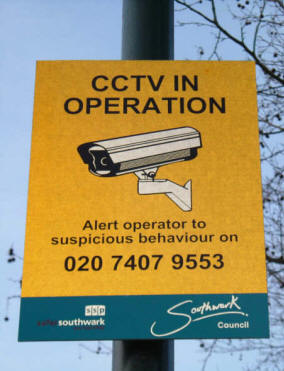
And so when civil liberties activists keep droning on about CCTV, DNA, face recognition, ID cards, Homeland Security, TIA and goodness know what else - forever into the future; with a brand new outburst every time that there is a new piece of technology - and we all start hearing, yet again, about Ruby Ridge, Waco and the Founding Fathers, I would say this to them. the spread of information is the key. In order to protect themselves from those in power, the spread of information is the key. Let me give you an example. CCTV seems to be a problem for certain people. But one solution, for example, could be that wherever digital CCTV cameras are employed to monitor the streets or particular events - such as public demonstrations - perhaps the law should require them to feed the information that is captured and recorded not only to the police but also to some independent citizen-oriented bodies over which the police have absolutely no influence. Wouldn't this be the best way to satisfy civil libertarians and the police? As it stands, however, we have the state - the police - quite rightly saying that in order to do their job properly they must be able to gather detailed information so that they can prevent crimes and capture those who perpetrate them. And so they want to have CCTV. On the other hand, the civil liberties activists do not want CCTV because, quite rightly, they want to protect their liberties and also prevent the police from abusing the power that CCTV would give them. Both sides have good arguments. However, in my opinion, feeding CCTV information both to the police and to independent citizen-oriented bodies would solve many of the problems. Not all of them, but most of them. such a system would protect both ordinary citizens and the police officers Indeed, such a system would protect both ordinary citizens and the police officers - who, one must point out, are not only very often the specific targets of assaults, but who are also on the receiving end of countless numbers of false allegations. But it is ordinary citizens who would gain the most.
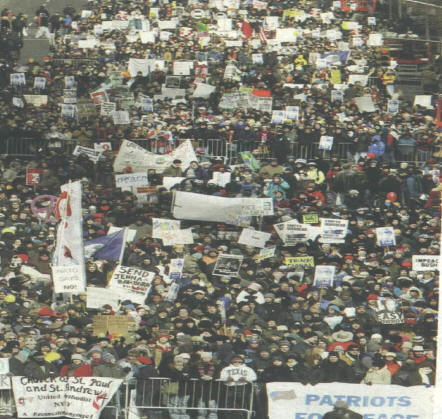
Let me put it this way: If you were taking part in a public demonstration being 'shepherded' by the police - i.e. the state - under which of the following circumstances would you feel the most secure? 1. No CCTV at all. 2. CCTV cameras feeding information only to the police department. 3. CCTV cameras feeding information to the police department and to independent citizen-oriented bodies. Look at these above three possibilities as a metaphor for what I am talking about in general when it comes to the need to spread information, and ask yourself which would make you feel the most secure; 1, 2 or 3? Well. With civil liberties activists continually arguing for number 1, we have, in fact, more or less ended up with number 2 - the very road to George Orwell's 1984 nightmare. And the reason that this Orwellian nightmare is already happening (e.g. Homeland Security) is precisely because there are many strong arguments for number 2, but very few strong arguments for number 1 - well, at least, as judged by most people. And the reason that we do not get number 3 is precisely because civil liberties activists do not seem particularly keen to argue for number 3 - and so number 3 does not get argued for! But, in my view, number 3 above gives us the best chance for the future. a. It allows for the development of a technology that is extremely beneficial. b. It helps the state to carry out its function of maintaining law and order - something which most people want. c. It helps to protect the ordinary citizen from any abuses of power by the state - or, indeed, from others. d. It also helps to protect the police. Putting all this rather bluntly: Most civil liberties activists are actually bringing about the very nightmare that they fear the most! Yep. They are actually promoting it. And they are actually promoting this nightmare by failing to argue for number 3. Best wishes AH |


AH's RSS Feed
Recent comments from some emails which can be viewed in full here. ...
"I cannot thank you enough."
"I stumbled upon your web site yesterday. I read as much as I could in 24 hours of your pages."
"I want to offer you my sincere thanks."
"Your articles and site in general have changed my life."
"I have been reading your articles for hours ..."
"Firstly let me congratulate you on a truly wonderful site."
"I must say there aren't many sites that I regularly visit but yours certainly will be one of them, ..."
"It is terrific to happen upon your website."
"I just wanted to say thank you for making your brilliant website."
"Your site is brilliant. It gives me hours of entertainment."
"You are worth your weight in gold."
"Love your site, I visit it on a regular basis for relief, inspiration and for the sake of my own sanity in a world gone mad."
"I ventured onto your site ... it's ABSOLUTELY BRILLIANT, and has kept me enthralled for hours!"
"I love the site, and agree with about 98% of what you post."
"I have been reading your site for a while now – and it is the best thing ever."
"you are doing a fabulous job in exposing the lies that silly sods like me have swallowed for years."

On YouTube ...
Who Rules Over Us?
Part 1 On Free Will
Part 2 On Super-Organisms
Part 3 On Power
Part 4 On Reality
Popular articles ...
... War on Drugs - Who benefits from the war on drugs?
... A Woman Needs A Man Like A Fish Needs A Bicycle - Surely, the evidence would suggest otherwise.
... Why Governments Love Feminism - It is mostly to do with money and power, not equality.
... The Psychological Differences Between Men and Women - Are women really more emotional than men?
... Equality Between Men and Women Is Not Achievable - especially since Hilary Clinton said that, "Women are the primary victims of war."
... Cultural Marxism And Feminism - The connections between Cultural Marxism and Feminism.
AH's RSS Feed