
|
Tea Abuse
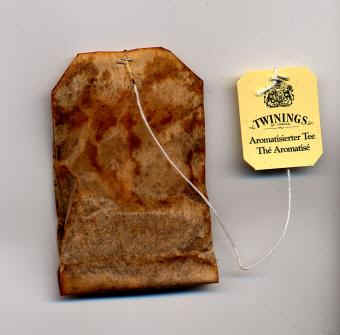
According to Science Daily "Sexual Abuse May Affect Health For A Lifetime." "Far from being a static experience, sexual abuse during youth may affect health even in old age, suggest the results of a study." An interesting study - but one that fails completely to address the question of the 'stresses' caused by a lifetime of negative and worrisome propaganda coming from the 'abuse industry' itself! For example, if, during the next 30 years, people were continually bombarded with convincing and rousing propaganda persuading them that having a parent who drank tea when they were children was a later cause of major depression, illness, suicide and psychological dysfunction, then, believe it or not, the result would be that such individuals would, indeed, suffer those very consequences. In other words, people whose parents drank tea would suffer serious consequences. Firstly, they would suffer directly from the negative propaganda about their parents - who would now be seen as highly abusive, unloving and uncaring because they drank tea. Secondly, they would falsely be led to believe that their current psychological problems were brought about because their parents had drunk tea. Thirdly, the relationships between themselves and their tea-drinking parents would be severely damaged. Fourthly, they would also suffer from any further consequences that could easily arise from all the above - e.g. from, perhaps, taking up smoking or drinking, marriage breakdown, poor sleep patterns etc. Fifthly, the chronic stress and worry that such things would bring about would undoubtedly lead to many further medical and psychological problems. Putting it bluntly: Any long-term negative effects stemming from events that happened in the past are considerably worsened - if not completely manufactured - by negative propaganda concerning such events. And if children and adults can both be seriously damaged by continual propaganda concerning the drinking of tea, just imagine how much worse would be the long term consequences had tea drinking actually been illegal at the time, and if it had also been openly considered by most people to be 'disgusting'. "Tea-drinking is a disgusting habit. It was illegal. I was their child. How could they have done this to me? They have clearly hurt me by doing this. I am suffering from this, and this, and that, because my parents drank tea. I am going to be traumatised for life. The therapists and the doctors tell me so. My parents didn't care about me. They drank tea every day. They couldn't have loved me at all!" The 'victims' of tea drinking parents would develop a mountain of pain, resentment and anger that would emotionally damage them as the years went by. Their relationships with their parents would be soured and poisoned forever. Their parents would be ridden with anguish and guilt. And their children's hatred toward them would be continuously fuelled by the ubiquitous propaganda that kept telling them over and over again how evil their parents must have been by drinking that disgusting tea. And the blame for many of their psychological ailments and life failings would be pinned on such parents. The victims' roots, their support systems and their very identities would be damaged. Their ability to trust in others would be irreparably harmed and thereafter inhibit them from getting close to others. They would therefore feel more alienated, more unhappy, more uncertain, more depressed, more anxious, and so on, as one thing led to another. And they would certainly be very much more 'diseased' as persons. why-oh-why would they be going through all of this terrible suffering? But why-oh-why would they be going through all of this terrible suffering? Because their parents had drunk tea? No. Of course not. The very notion is utterly preposterous. They would be going through all this suffering solely because of the machinations of the abuse industry. I want to repeat that last sentence. They would be going through all this suffering SOLELY because of the machinations of the abuse industry. You can cause terrible pain and illness, and real, deep-seated, long term suffering to people, just by making credible the message that drinking tea is a disgusting thing to do, or to have done. And it is by promoting this type of phony propaganda that many charities, therapists and lawyers nowadays make their living. It is in the interests of these groups working in the abuse industry to 'discover' a common pain or ailment and to link it backward in time to some alleged cause. Then, whether it be through the lawyers in court exaggerating in order to get more money in damages for their clients, or whether it be through the therapists stirring it up, the whole thing begins to snowball. And, before very long, those with similar vested interests encourage others to climb aboard the bandwagon and so the whole notion spreads even further. The result is a great deal of pain and misery throughout society The result is a great deal of pain and misery throughout society as more and more people become convinced of the terribleness of it all, and of how badly they, too, have suffered - and will suffer - from whatever it is that the abuse industry is making a fuss about. Piled on top of all this, there is the resentment and the blame that is purposefully directed toward those people who were supposedly the cause of all this suffering - and these, of course, are usually closely-related others, such as the parents. it is not hard to see how the general health and sense of well-being of very many people can be damaged solely by the actions of the abuse industry. And so it is not hard to see how the general health and sense of well-being of very many people can be damaged solely by the actions of the abuse industry. And the whole of society can be caught up in such self-destructive fiascos. But how much easier it is for matters to become far worse and far more widespread when the thorny issue of S-E-X is involved. Vast entertainment organisations and the media industries make BILLIONS from focusing on sex. They have every incentive to exaggerate the extent of any problems associated with sex and to inflame the general public's response to them. And, of course, the general public's thirst for sexual titillation - and for the most sensational of stories - guarantees that propaganda about sex will always reach a large and receptive audience. And so imbuing people with the notion that sexual abuse leads to long-term suffering is infinitely easier to do in comparison to making similar claims over tea drinking. Indeed, the abuse industry's machinations in this area over the past three decades have been extremely successful. But they have not only led to a society that is now positively obsessed with the dangers of sexual contact, they have also produced a society that seems absolutely possessed by a fraudulently manufactured deep-rooted suspicion of any kind of intimacy. Millions of people, literally, have been seriously damaged by the propaganda that the abuse industry has ceaselessly manufactured. Millions of people, literally, have been seriously damaged by the propaganda that the abuse industry has ceaselessly manufactured. Hardly anything could be more alienating and emotionally poisonous for people. And, of course, the addition of handsome financial compensation for the alleged victims of 'abuse' by the justice system simply validates the hysteria and makes all the above negative consequences for society much worse. And all these negative consequences - many of them truly appalling - can easily be brought about by creating continuous hysteria over the drinking of tea! And the Science Daily would then be telling us that ... "Far from being a static experience, tea abuse during youth may affect health even in old age" And the research statistics would, indeed, strongly support such a claim. The truth of the matter, however, would be that the people to blame for such negative effects would not be the tea drinkers themselves. It would be those in the abuse industry who continually bombarded the people with their phony self-serving propaganda. I was sent to see a psychiatrist on a regular basis When I was a youngster, I suffered from asthma. At around the age of 12 to 13 years old (circa 1964) I was sent to see a psychiatrist on a regular basis because this asthma of mine was, apparently, caused by some kind of 'mother complex'. In other words, the dynamics of the relationship between my mother and me was, allegedly, the cause of my asthma. Well, needless to say, as medical research progressed, it was later discovered that asthma was caused by other things - in my case, an allergy to certain fibres - including the fur of my own cat. But the point that I want to get across here is this. My mother (not my father) was being blamed for my asthma. And, needless to say, the relationship between her and me was somewhat strained by this. She, no doubt, felt very guilty about being the cause of my asthma, and - from what I can remember - I felt somewhat guilty that she felt guilty, but I was also somewhat put out with regard to what, exactly, she, as a mother, might be doing wrong. In other words, the relationship between us was being damaged quite significantly by the bogus theories being promulgated at the time and by the arrogance of those working in a profession who claimed to know what they were talking about when, quite clearly, they did not. Furthermore, had some kind of allegedly 'objective' investigation taken place in those days concerning the kind of relationships that asthmatic children had with their mothers, what would they have discovered? Well, presumably, they would have discovered that these relationships were somewhat strained. Well, of course they would have been strained! But they would have been strained by the very people who had continually bombarded the public with their hocus-pocus concerning the causes of asthma. Are the kids all right? Dr Helene Guldberg (PhD in Child Development) Studies looking at the effect of early traumatic experiences on children - that is, events experienced DIRECTLY by children rather than just images they have seen - have found that neither the severity of the event nor the age of the child at the time can help us predict whether the child will experience behavioural or emotional problems later on. As child development expert Rudolph Schaffer points out: 'It has become apparent that there is no direct relationship between age and the impact which experience has on the individual, that young children are not necessarily more vulnerable even to quite severe adversities than older children, and that considerable variability exists in long-term outcome.' The one variable that does help to predict how a traumatic event might impact on children is how the adults around them cope with it. Now, let's read that last bit again, together. The ONE variable that DOES help to predict how a traumatic event might impact on children is how the adults around them cope with it. Now, the word 'adults' does not, in fact, solely apply to those who are closely in contact with the children themselves, but also to all those people who 'impinge' upon children, whether they be professionals such as social-workers, therapists, counsellors, doctors, nurses, teachers, and so on, as well as to those adults in the media and those running children's 'charities' who appear on our TV screens. It is these people who determine how much 'trauma' the child experiences. In fact, they are more responsible for the trauma than the incident itself. NEITHER the SEVERITY of the event nor the age of the child at the time can help us predict whether the child will experience behavioural or emotional problems later on The ONE variable that DOES help to predict how a traumatic event might impact on children is how the adults around them cope with it. This fact of life discredits all those professionals who are involved in creating the 'abuse hysteria' that pervades the psychological atmosphere in which most of us have nowadays to live. it is the hysteria-mongers themselves, such as those in the NSPCC, ... who cause far more harm to our children - and, indeed, to adults - than they ever prevent; Indeed, it is the hysteria-mongers themselves, such as those in the NSPCC, in the anti-smacking lobby and in the social services, who cause far more harm to our children - and, indeed, to adults - than they ever prevent; e.g. see Children's Charities Sued for Millions?. If this was not bad enough, these agencies have also had an enormous negative influence on how men are perceived e.g. see NSPCC Needs To Be Stopped. Men have now been so heavily demonised by these agencies - and, as a further consequence, relationship laws have been so heavily stacked against them - that they can barely have close relationships any longer without forever having to walk on eggshells. children's charities like the NSPCC are little more than pernicious rackets In my view, so-called children's charities like the NSPCC are little more than pernicious rackets that make very good money from demonising men (and, indeed, women) and by claiming, falsely, that they can alleviate the suffering of children caused by others when, in fact, it is they, themselves, that are causing most of any suffering that some of our children often end up experiencing. |
|
In a nutshell: Whatever kind of 'abuse' people have experienced in the past (rape, harassment, assault etc) is made CONSIDERABLY WORSE by those whose self-serving propaganda is designed to make them feel worse. And then, unsurprisingly, the 'researchers' will ERRONEOUSLY interpret the CONSIDERABLY WORSE outcome as being caused by the 'abuse' rather than by the self-serving propaganda. This is how those working in the abuse industry - which is vast in size - nowadays make their living. And it is mostly at the expense of men. |
|
USA Long
before I was elected to Congress, I served as a U.S. Navy Medical Corps
PSYCHIATRIST at the Long Beach Naval Station, home of the 7th Fleet. I treated
the walking wounded of the Vietnam War from 1968 to 1970. ... On September 11,
Americans suffered a horrible trauma, and we still suffer from the
psychological fallout of the terrorist attacks. The administration's calculated
campaign to raise and maintain fear and anxiety in America has been an
effective tool in prolonging the effects of post-traumatic stress disorder
caused by 9-11. Jim McDermott
New Yorkers Avoid 9/11 Memories 'Ten years later, it's the same thing all over again: people dragging out tattered remains, opportunistic politicians jumping on the anniversary, and New Yorkers being forced to relive the horror of that terrible day.' The abuse industry, of course, loves to keep reminding people of times when they were hurt, because it keeps the pain alive - which means business! |
|
Debilitation and Death Caused By Fear Taken from a lecture by Michael Crighton ... Some of you know I have written a book that many people find controversial. It is called State of Fear, and I want to tell you how I came to write it. Because up until five years ago, I had very conventional ideas about the environment and the success of the environmental movement. The book really began in 1998, when I set out to write a novel about a global disaster. In the course of my preparation, I rather casually reviewed what had happened in Chernobyl, since that was the worst manmade disaster in recent times that I knew about. What I discovered stunned me. Chernobyl was a tragic event, but nothing remotely close to the global catastrophe I imagined. About 50 people had died in Chernobyl, roughly the number of Americans that die every day in traffic accidents. I don't mean to be gruesome, but it was a setback for me. You can't write a novel about a global disaster in which only 50 people die. Undaunted, I began to research other kinds of disasters that might fulfill my novelistic requirements. That's when I began to realize how big our planet really is, and how resilient its systems seem to be. Even though I wanted to create a fictional catastrophe of global proportions, I found it hard to come up with a credible example. In the end, I set the book aside, and wrote Prey instead. But the shock that I had experienced reverberated within me for a while. Because what I had been led to believe about Chernobyl was not merely wrong,it was astonishingly wrong. Let' review the data. The initial reports in 1986 claimed 2,000 dead, and an unknown number of future deaths and deformities occurring in a wide swath extending from Sweden to the Black Sea. As the years passed, the size of the disaster increased; by 2000, the BBC and New York Times estimated 15,000-30,000 dead, and so on. Now, to report that 15,000-30,000 people have died, when the actual number is 56, represents a big error. Let' try to get some idea of how big. Suppose we line up all the victims in a row. If 56 people are each represented by one foot of space, then 56 feet is roughly the distance from me to the fourth row of the auditorium. Fifteen thousand people is three miles away. It seems difficult to make a mistake of that scale. But, of course, you think, we' talking about radiation: what about long-term consequences? Unfortunately here the media reports are even less accurate. The chart shows estimates as high as 3.5 million, or 500,000 deaths, when the actual number of delayed deaths is less than 4,000. That's the number of Americans who die of adverse drug reactions every six weeks. Again, a huge error. But most troubling of all, according to the UN report in 2005, is that "the largest public health problem created by the accident" is the "damaging psychological impact [due] to a lack of accurate information…[manifesting] as negative self-assessments of health, belief in a shortened life expectancy, lack of initiative, and dependency on assistance from the state." the greatest damage to the people of Chernobyl was caused by bad information. In other words, the greatest damage to the people of Chernobyl was caused by bad information. These people weren't blighted by radiation so much as by terrifying but false information. We ought to ponder, for a minute, exactly what that implies. We demand strict controls on radiation because it is such a health hazard. But Chernobyl suggests that false information can be a health hazard as damaging as radiation. I am not saying radiation is not a threat. I am not saying Chernobyl was not a genuinely serious event. But thousands of Ukrainians who didn't die were made invalids out of fear. They were told to be afraid. They were told they were going to die when they weren't. They were told their children would be deformed when they weren't. They were told they couldn't have children when they could. They were authoritatively promised a future of cancer, deformities, pain and decay. It' no wonder they responded as they did. In fact, we need to recognize that this kind of human response is well-documented. Authoritatively telling people they are going to die can in itself be fatal. You may know that Australian aborigines fear a curse called "pointing the bone." A shaman shakes a bone at a person, and sings a song, and soon after, the person dies. This is a specific example of a phenomenon generally referred to as "hex death"—a person is cursed by an authority figure, and then dies. According to medical studies, the person generally dies of dehydration, implying they just give up. But the progression is very erratic, and shock symptoms may play a part, suggesting adrenal effects of fright and hopelessness. Yet this deadly curse is nothing but information. And it can be undone with information. A friend of mine was an intern at Bellvue Hospital in New York. A 28-year old man from Aruba said he was going to die, because he had been cursed. He was admitted for psychiatric evaluation and found to be normal, but his health steadily declined. My friend was able to rehydrate him, balance his electrolytes, and give him nutrients, but nevertheless the man worsened, insisting that he was cursed and there was nothing that could prevent his death. My friend realized that the patient would, in fact, soon die. The situation was desperate. Finally he told the patient that he, the doctor, was going to invoke his own powerful medicine to undo the curse, and his medicine was more powerful than any other. He got together with the house staff, bought some headdresses and rattles, and danced around the patient in the middle of the night, chanting what they hoped would be effective-sounding phrases. The patient showed no reaction, but next day he began to improve. The man went home a few days later. My friend literally saved his life. This suggests that the Ukranian invalids are not unique in their response, but by the large numbers of what we might call "information casualties" they represent a particularly egregious example of what can happen from false fears. |

AH's RSS Feed
Recent comments from some emails which can be viewed in full here. ...
"I cannot thank you enough."
"I stumbled upon your web site yesterday. I read as much as I could in 24 hours of your pages."
"I want to offer you my sincere thanks."
"Your articles and site in general have changed my life."
"I have been reading your articles for hours ..."
"Firstly let me congratulate you on a truly wonderful site."
"I must say there aren't many sites that I regularly visit but yours certainly will be one of them, ..."
"It is terrific to happen upon your website."
"I just wanted to say thank you for making your brilliant website."
"Your site is brilliant. It gives me hours of entertainment."
"You are worth your weight in gold."
"Love your site, I visit it on a regular basis for relief, inspiration and for the sake of my own sanity in a world gone mad."
"I ventured onto your site ... it's ABSOLUTELY BRILLIANT, and has kept me enthralled for hours!"
"I love the site, and agree with about 98% of what you post."
"I have been reading your site for a while now – and it is the best thing ever."
"you are doing a fabulous job in exposing the lies that silly sods like me have swallowed for years."

On YouTube ...
Who Rules Over Us?
Part 1 On Free Will
Part 2 On Super-Organisms
Part 3 On Power
Part 4 On Reality
Popular articles ...
... War on Drugs - Who benefits from the war on drugs?
... A Woman Needs A Man Like A Fish Needs A Bicycle - Surely, the evidence would suggest otherwise.
... Why Governments Love Feminism - It is mostly to do with money and power, not equality.
... The Psychological Differences Between Men and Women - Are women really more emotional than men?
... Equality Between Men and Women Is Not Achievable - especially since Hilary Clinton said that, "Women are the primary victims of war."
... Cultural Marxism And Feminism - The connections between Cultural Marxism and Feminism.
AH's RSS Feed